Chapter II · 1985
Tom Walkinshaw Racing had won touring-car championships for Jaguar. Now the company asked it to build a Group C car from carbon fibre — in under two years.
The XJR-6 was a Tony Southgate creation: a carbon-fibre and Kevlar tub, a target weight near 900 kg, and the Jaguar V12 growing from 6.3 towards 6.5 litres under Lucas electronic engine management. Southgate had seen every kind of shortcut and every kind of trap. The traps found them anyway — valve-spring failures, piston circlips that let the pistons walk on their pins, doors taped shut to survive test days, and understeer dominating the first running.
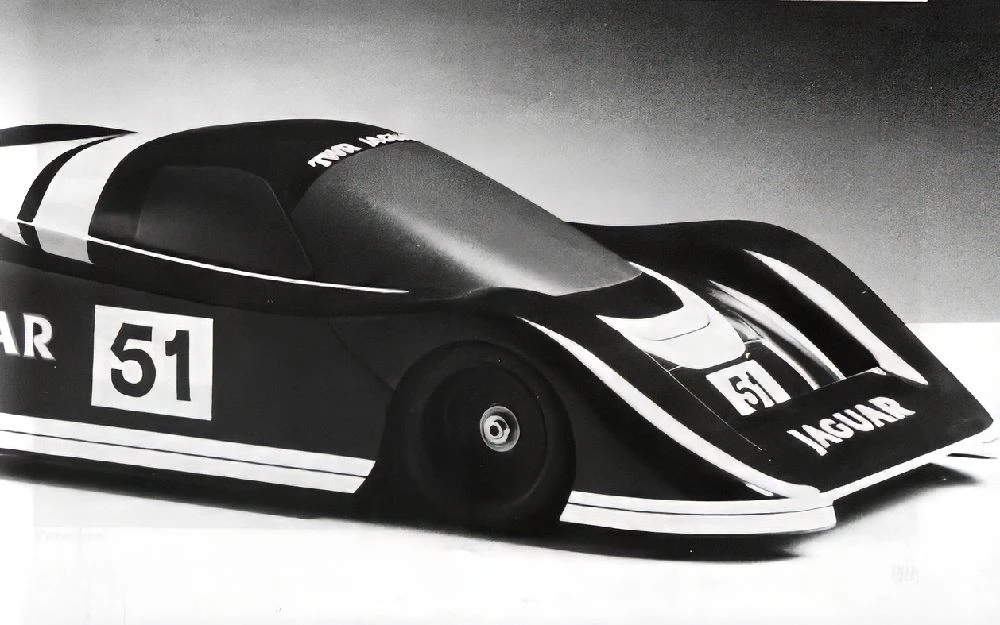
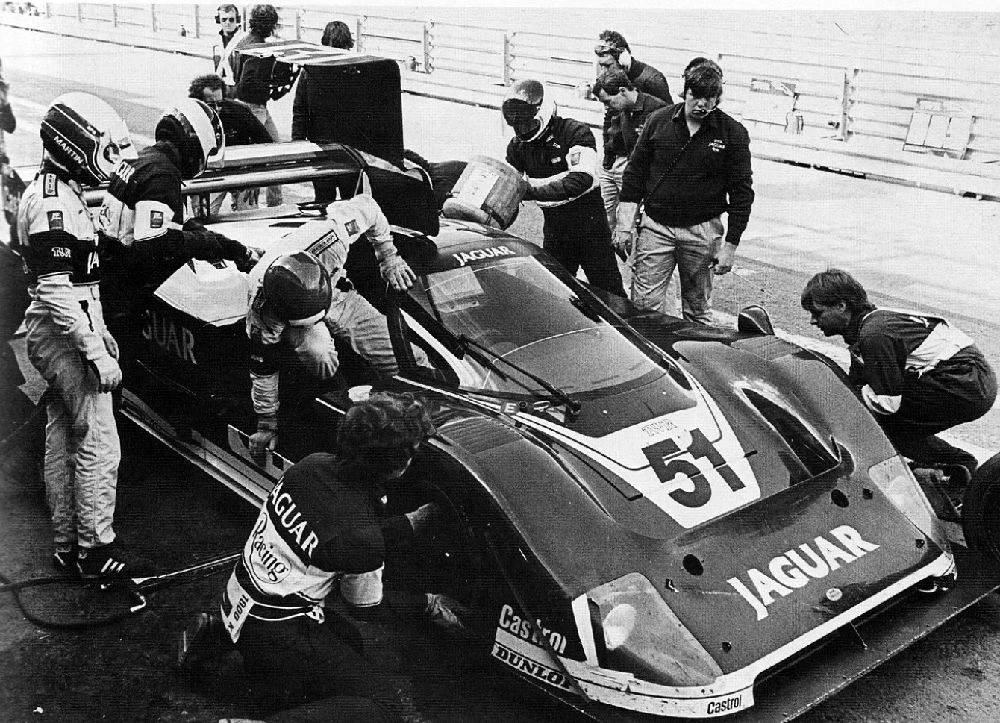
Martin Brundle and Mike Thackwell did most of the development, spending July 1985 ironing the car out at Donington. A planned Hockenheim début slipped away, to the disappointment of Jaguar Deutschland, and the programme aimed instead at Canada.
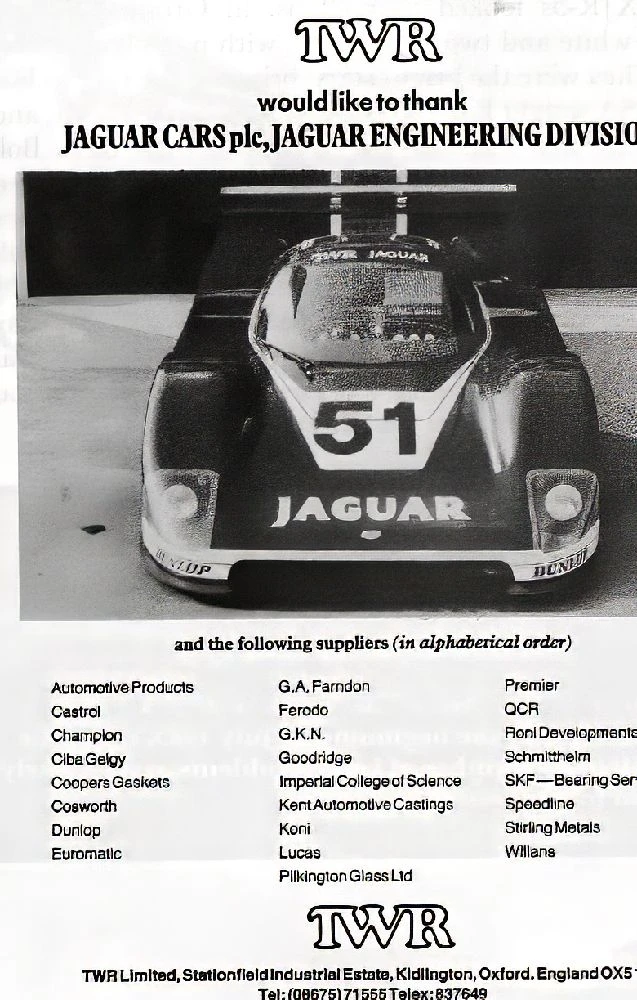
It took an industry to race against Porsche's industry. TWR's thank-you advertisement listed the suppliers who made the XJR-6 possible — a roll-call of British motorsport firms, headed by the Silk Cut sponsor that would soon define the car's look.
Next instalment: Debut at Mosport — the XJR-6 meets the world